
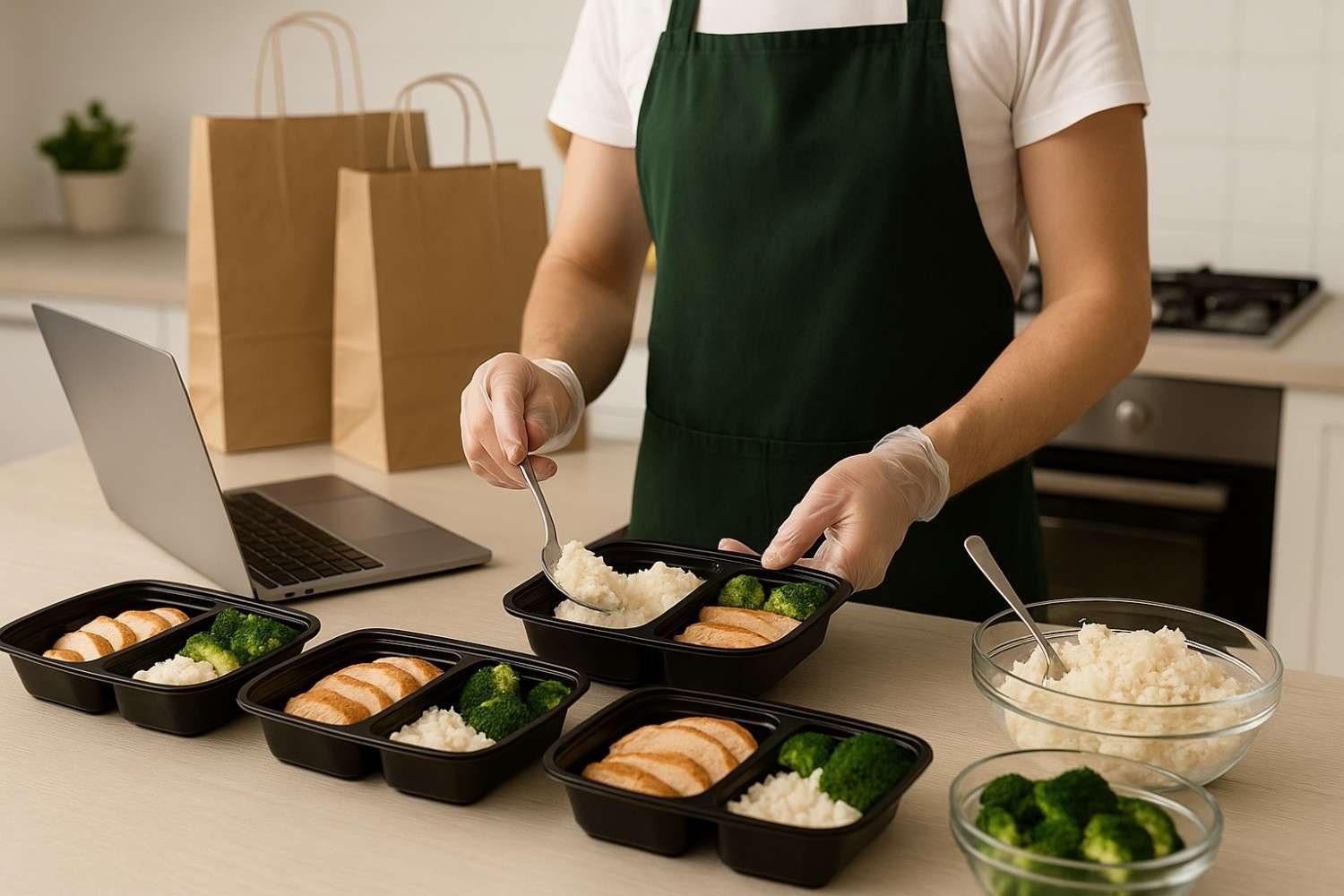
If you’ve been researching how to start a meal prep business, you’re tapping into one of the fastest-growing segments of the food industry. With Americans prioritizing convenience, health, and time-saving meals, meal prep services continue to expand across local markets. But success in this industry requires more than great recipes—it demands careful planning, strict food-safety compliance, and a solid business strategy.
This guide brings together the most effective practices from top-ranking meal prep business resources to help you launch confidently and legally.
Build a Solid Foundation Before You Launch

Define Your Business Model and Niche
Start with clarity about who you serve and what makes your meals unique. A focused niche helps you stand out and streamline operations. Examples include:
- High-protein meals for fitness-focused clients
- Calorie-controlled or weight-loss friendly menus
- Allergen-friendly, keto, plant-based, or gluten-free options
- Family-style bulk meals
- Senior-friendly soft or low-sodium meals
Your niche will shape your menu, pricing, marketing, and production workflow.
Create a Practical, Scalable Business Plan
A strong business plan covers:
- Target market and customer demographics
- Menu themes and pricing strategy
- Operational workflows (ordering, production, storage, delivery)
- Marketing strategy and brand positioning
- Financial forecasting and startup costs
The clearer you are now, the easier your launch becomes—this is especially important if you pursue funding or kitchen rental agreements.
Understand Local Food Laws Before Preparing Anything
Launching a meal prep business requires strict compliance with food safety laws, and regulations vary significantly by state and city. This section includes essentials top competitors emphasize but also integrates your additional regulatory details.
Register Your Business Legally
You may need:
- A general business license
- State business registration (LLC, sole proprietorship, corporation)
- Employer Identification Number (EIN) if hiring staff
Food Facility Registration
In the U.S., some meal prep operations—especially those producing packaged meals—must also register with:
- The FDA (for certain food processing or interstate distribution)
- Your state’s Department of Agriculture or Health
Registration requirements vary, so confirm with your local agency.
Choose the Correct Kitchen Type
Most states do not allow selling perishable, ready-to-eat meals from a standard home kitchen.
Your options include:
- Commissary or shared commercial kitchen (most common)
- Commercial restaurant kitchen rentals
- Microenterprise Home Kitchen Operations (MEHKOs) — allowed only in select counties
- Cottage food laws — usually limited to breads, dry goods, and non-hazardous foods; not applicable for full meal prep
Before renting a kitchen, ask your health department whether your business is classified as catering, retail food, or food manufacturing.

Food Service License and Inspections
You’ll need:
- A food service establishment permit
- Initial and routine health inspections
- Commercial kitchen compliance (ventilation, sanitation, food storage, refrigeration logs, etc.)
Violations can delay your launch, so ensure your facility meets all FDA and local code standards.
Food Safety Certifications
Most states require at least one Certified Food Protection Manager (often ServSafe). Some require:
- Food handler cards for every employee
- Allergen-safety training
- HACCP-style procedures for certain foods
Insurance and Basic Contracts
To protect your business, secure:
- General liability insurance
- Product liability coverage
- Commercial auto coverage (if delivering meals yourself)
It’s also smart to use basic customer agreements outlining pickup/delivery windows, cancellation policies, and refund terms.
Set Up Your Kitchen, Equipment, and Menu Workflow

Commercial Kitchen Setup
A functioning meal prep business needs more than a home pantry. Typical requirements include:
- Large food prep tables
- Commercial ovens and stovetops
- Proper refrigeration and freezer capacity
- Food-safe shelving and storage
- Sanitizing stations
- Food thermometers, logs, and labeling systems
Shared kitchens often include most of these, reducing upfront costs.
Plan a Repeatable Weekly Menu
The most successful meal prep companies offer:
- 6–12 core meals rotated seasonally
- Batch-friendly recipes with overlapping ingredients
- Balanced meals with clear calorie and macro details
- Allergen labeling for safety and compliance
Clear labeling is essential and may need to include:
- Ingredients
- Allergen disclosures
- Prepackaged meal weight
- Storage and reheating instructions
- “Made in” location
Pricing Your Meals
Calculate pricing based on:
- Food cost per meal
- Labor time
- Kitchen rental
- Packaging
- Delivery costs
- Overhead (insurance, software, utilities)
Many operators keep food costs around 25–35% of the selling price to maintain profitability.
Build Your Ordering, Delivery, and Payment Systems

Set Up Ordering
Top meal prep businesses streamline ordering with:
- A branded website or Shopify store
- Weekly ordering deadlines
- Subscription or recurring ordering options
- Secure payment processing
Organize Delivery or Pickup
Choose one or more:
- Customer pickup windows
- Local delivery zones with set fees
- Partnering with gyms or offices for centralized pickup
- Third-party courier services
During delivery, food temperatures must remain safe—typically under 40°F for cold meals.
Market and Grow Your Meal Prep Business
Use a mix of:
- Instagram and TikTok food-prep videos
- Testimonials and before-after customer transformations
- Collaborations with trainers, nutritionists, and gyms
- Introductory promotions or first-week deals
- Email lists with weekly menu reminders
Retention is key—consistent quality and excellent customer service will keep your weekly orders full.
Frequently Asked Questions
1. Is a meal prep business profitable?
Yes. With efficient batch cooking and steady weekly orders, meal prep businesses can be highly profitable. Successful companies maintain strong margins by buying ingredients in bulk and using repeatable menus.
2. Do I need a commercial kitchen to start a meal prep business?
In most states, yes. Cottage food laws rarely allow cooked or perishable meals. Check with your local health department to confirm whether you must use a commercial or commissary kitchen.
3. How much does it cost to start a meal prep business?
Startup costs vary widely, but a small operation using a shared commercial kitchen may start with $1,000–$5,000. Larger setups can range from $10,000–$15,000+, depending on equipment and staffing.
4. Do I need FDA registration?
Sometimes. If your business involves packaged meals or distribution beyond your state, FDA and state facility registration may apply. Always verify with your local Department of Health or Agriculture.
Final Thoughts
Starting a food business isn’t just about feeding people—it’s about solving a real problem in someone’s daily life. When you learn how to start a meal prep business the right way, you’re not only building a company; you’re giving customers back their time, their energy, and sometimes even their health. That’s a meaningful impact.
If you take the time to plan carefully, respect food safety laws, build a menu you’re proud of, and deliver consistently great service, you don’t just launch a business—you build something people come to rely on week after week. And in an industry driven by trust and convenience, that reliability becomes your biggest competitive advantage.
So start small, stay compliant, listen to your customers, and refine your systems as you grow. The market is ready for fresh ideas and dependable businesses. With the right approach, your meal prep service can become more than just a side hustle—it can become a brand people love, recommend, and return to again and again.
Your first batch of meals could be the beginning of something much bigger.


